


“I am in Gaza, and I Have One Hadas and One Aravah – Can I Recite a Beracha on This Set?”
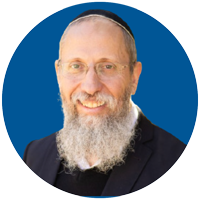
BY RABBI YOSEF ZVI RIMON
First published in Israel Hayom (Hebrew), October 6, 2025, on the eve of Sukkot 5786.
Our lives are full of moments of challenge and difficulty – but it is precisely in those moments that we are tested. It is precisely then that the unity of family, nation, and society becomes a source of strength, joy, and hope. Sukkot is a festival of joy, and it symbolizes the wondrous unity of Am Yisrael.
An hour before the festival began, a soldier in Gaza sent me a message headed: “Urgent question from Gaza.” I was certain it involved a matter of pikuach nefesh. His question: “I am in Gaza, and I have one hadas and one aravah (in addition to the etrog and lulav). Can I recite a beracha on this set?” I was deeply moved. A soldier in the midst of combat, filled with the spirit of Torah, of faith, of longing to fulfill a mitzvah!
Chazal teach that the aravah symbolizes those who possess neither “taste nor fragrance” – those who seem to lack both Torah knowledge and good deeds. Yet without the aravah, one cannot recite the beracha. There is a machloket regarding the law when only one aravah is available; the accepted custom is not to recite the beracha in such a case (Shulchan Aruch 651:1 and Mishnah Berurah there). Without the “aravot” of Am Yisrael – those simple people who may feel they lack significance – the nation as a whole cannot endure. Everyone is needed.
A further point connecting Sukkot to the theme of unity emerges from the Gemara in Sukkah 27, which teaches that while the arba’a minim must belong to you – “mishelachem” – the mitzvah of sukkah may be fulfilled in a friend’s sukkah. The reason: all of Am Yisrael are worthy of sitting together in one great sukkah. Since this is not physically possible, we divide into smaller sukkot – but the essential reality remains: we are, as it were, one great sukkah. This is a festival of unity, and a festival of joy. And that unity is the source of our strength.
A soldier shared with me another moving story, this one from a soldier who served in Lebanon, about the challenging effort to fulfill the mitzvah of arba’a minim. The sets that reached the unit were few, and over time they deteriorated. They recited Hallel together, each soldier waving the set once and passing it to the next. When all the aravot fell off, they set out on a search across different bases until they found one partial set that managed to suffice for everyone.
When he returned from the war, he understood something profound: in battle, in the fight for the survival of Am Yisrael, “there are no empty aravot.” Every fighter is a pure soul giving his life for the nation – there can be no empty aravah. How wondrous is Am Yisrael; how wondrous are our soldiers.
Seeing the good is our choice. A soldier in Gaza told me that he encountered another soldier covered in tattoos – his entire body. The tattooed soldier said to him: “I have one last place on my body for a tattoo. I’m going to put it there for my friends.” The religious soldier replied: “I see you have one completely free arm?” The soldier answered: “That’s the arm for tefillin. There I put no tattoos.”
Each of us can decide: do we look at the tattoo, or do we look at the tefillin? Do we see the problematic sides, or do we see the covenant? We all carry both tattoos – the “scratches” of our transgressions – and good things. Our goal is to see the good in others, to see good in ourselves, to see good in G-d’s world, and to merit, G-d willing, an abundance of goodness – goodness that brings yet more goodness in its wake.
Let us pray for our precious soldiers, that they not be harmed. Let us pray for the wounded and for all the families affected by the war. But let us remember: the events of Simchat Torah began after a period of profound division within Am Yisrael. The path to repair lies in our unity. Thank G-d, since the war began, the overwhelming majority of the nation has wanted unity, has wanted to be together. I believe that this unity has also brought about the great military achievements of this war – and will bring, G-d willing, further stages in the unfolding of our redemption.
Rabbi Yosef Zvi Rimon is the Nasi of World Mizrachi. He is the Founder and Chairman of Sulamot and La’Ofek, and serves as the Chief Rabbi of Gush Etzion, and Rosh Yeshivah of the Jerusalem College of Technology.