


Six Days That Changed History: Halachot of Yom Yerushalayim
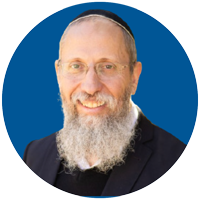
BY RABBI YOSEF ZVI RIMON
On the eve of the Six Day War in 5727 (1967), Israel’s security situation was extremely tense. The Arab states were preparing for war, and in Israel there was deep fear of catastrophic consequences – a complete destruction of the state. But when the war broke out, we witnessed open miracles: the IDF destroyed large portions of the Egyptian air force while it was still on the ground, and within six days captured the Sinai Peninsula, Jerusalem, Judea and Samaria, and the Golan Heights. It was a dazzling victory.
To mark this victory – which was a salvation from death to life – and to mark the liberation of Jerusalem from foreign rule after two thousand years of galut, we celebrate Yom Yerushalayim.
Reciting Hallel on Yom Yerushalayim
In general, the halachic ruling regarding Yom Yerushalayim is identical to – and in fact more straightforward than – the ruling regarding Yom HaAtzmaut. Regarding Yom HaAtzmaut, there is room to debate whether the miracle is sufficient to warrant reciting Hallel with a beracha – since the miracle was incomplete, our enemies still seek our destruction, and the spiritual state of the country remains unrectified. But regarding Yom Yerushalayim, it is even easier to rule that Hallel should be recited with a beracha: the victory of the Jewish people in the Six Day War was total and unqualified, it was a complete salvation from death to life, and it included the capture of Jerusalem – our capital, our holy city, our glory.
Rav Unterman writes: “There is certainly a supremacy to the day that marks the very existence of the state with regard to celebration and joy, and it will forever remain the birthday of the State of Israel. We hope our state will flourish and prosper, will gather the exiles and go from strength to strength, paving the way for our complete redemption. However, regarding the blessing of Hallel – there is a preference for the 28th of Iyar, when open miracles were seen: how the entire power of our enemies collapsed within two days, and we liberated Jerusalem and the surrounding cities. For a day of open miracles – Hallel must be recited with a beracha” (She’elot u-Teshuvot Shevet MiYehuda, vol. 2, OC siman 59:2).
Indeed, regarding Yom Yerushalayim, the Chief Rabbinate ruled from the outset that Hallel is recited with a beracha (Chief Rabbinate of Israel, 967–979; see also Eretz Chemdah [Rav Shaul Yisraeli], 1:66–71), and this remains the accepted practice today.
Yom Yerushalayim that falls on Friday
Unlike Yom HaAtzmaut – where the accepted practice is to recite Hallel on whatever day the celebrations are held that year, not necessarily on the 5th of Iyar itself – regarding Yom Yerushalayim it has been established that Hallel is recited every year on the 28th of Iyar, even when it falls on Friday (Yom Yerushalayim cannot fall on Shabbat). Only the public celebrations are moved up to Thursday to prevent chillul Shabbat (Chief Rabbinate of Israel, 983–984). The reason is that unlike Yom HaAtzmaut, the celebrations of Yom Yerushalayim do not carry the same risk of leading to chillul Shabbat (see She’elot u-Teshuvot BeOhalah shel Torah, 2:73).
Mourning practices of Sefirat HaOmer on Yom Yerushalayim
Since Yom Yerushalayim falls after Lag BaOmer, and many follow the practice of concluding their mourning customs after Lag BaOmer, the question of shaving and celebrating on Yom Yerushalayim is relatively simple. It is therefore permitted to shave, sing, and rejoice on Yom Yerushalayim – even for those who still observe aveilut practices during this period of the Omer.
Additionally, the Chief Rabbinate of Israel has ruled that it is permitted to marry on Yom Yerushalayim (She’elot u-Teshuvot Shevet MiYehuda, vol. 2, OC siman 60; She’elot u-Teshuvot BeMar’eh HaBazak, 3:59, p. 101), and this is the accepted practice. It is proper to ensure that the chuppah takes place either on the night of Yom Yerushalayim after tzeit hakochavim, or on Yom Yerushalayim itself before shkiah.
Rabbi Yosef Zvi Rimon is the Nasi of World Mizrachi. He is the Founder and Chairman of Sulamot and La’Ofek, and serves as the Chief Rabbi of Gush Etzion, and Rosh Yeshivah of the Jerusalem College of Technology.