


Rosh Hashanah is the day the world was created (Rosh Hashanah 27a, according to Rabbi Eliezer). In the Torah, this day is called “Zikaron, Remembrance – a memorial proclaimed with the blast of horns” (Vayikra 23:24). Therefore, the holiday is called “Yom HaZikaron, The Day of Remembrance” in our tefillot. This Day of Remembrance expresses G-d’s providence over the world, and in light of this it is also called the Day of Judgment (Mishnah, Rosh Hashanah 1:2). This is why we recite the special prayer of “U’Netaneh Tokef” on this day.
The Day of Judgment arouses trepidation. However, the Sages (following Nechemiah 8) taught us that Rosh Hashanah is a festival, on which we eat special foods, meat, and drink wine (Shulchan Aruch 597). How can this be? It is a Day of Judgment! The Sages (Tur 581:4) taught us that indeed it is a Day of Judgment, but the Holy One desires our good. If we make good decisions and try to be good, we know that G-d will seal our verdict favorably.
The shofar blasts
The Torah also calls Rosh Hashanah “Yom Teruah, the day of the sounding of the horn” (Bamidbar 29:1). Therefore, there is a biblical commandment to blow the shofar on Rosh Hashanah. What is the meaning of the shofar blowing? The blowing consists of a simple sound (tekiah), a groan and a wail (shevarim and teruah). Ostensibly, the blasts are meant to shake us up and awaken us (Maimonides, Laws of Repentance 3:4).
However, there is room to examine this reasoning. While the shevarim may symbolize weeping and create a “shaking,” the teruah in the Torah is specifically a sound of joy associated with coronating a king: “With trumpets and the blast of the horn, raise a shout before the L-rd, the King” (Tehillim 98:6). If so, it is unclear – does the shofar blowing symbolize weeping and brokenness or the coronation of a king and joy?
Shofar blowing is meant to remind us of our role in the world, our mission. On the one hand, there is apprehension: perhaps we have failed in our mission, perhaps there are things we did not act properly in, and we must fix them. On the other hand, the very privilege we have to coronate G-d shows how much G-d loves us, how much G-d believes in us. G-d’s love for us gives us the strength to fix, gives us the strength to reach a pure and clean place even after the brokenness (shevarim).
How many blasts are required? Strictly speaking, it suffices to blow thirty blasts. Meaning, three sequences of tashrat (tekiah, shevarim, teruah, tekiah), three sequences of tashat (tekiah, shevarim, tekiah), and three sequences of tarat (tekiah, teruah, tekiah). These blasts are sounded in the synagogue before the Musaf prayer. In addition, another thirty sounds are blown according to the order of the Amidah blessings (ten for Malchuyot, ten for Zichronot, and ten for Shofarot). Some have this custom for both the silent Amidah and the repetition by the prayer leader, while others only during the repetition (and complete another thirty blasts after Musaf). It became customary to complete one hundred blasts (Tosafot Rosh Hashanah 33b), therefore adding another ten at the end: tashrat, tashat, tarat. Hence, ideally one should hear all the blasts, but strictly speaking thirty blasts suffice. For this reason too, when sounding for women or others who could not attend services, thirty blasts are sounded.
Why is Rosh Hashanah two days?
Rosh Hashanah is the only holiday that lasts two days (in the Land of Israel). Since the Hebrew calendar is determined according to the moon, each month witnesses would come and testify that they saw the new moon, and the rabbinical court would declare that day as the new month (today we do this based on the calendar and not witnesses).
Rosh Hashanah is the only holiday that begins at the start of a new month. Consequently, it was difficult to notify everyone when the holiday began, so they established Rosh Hashanah as two days, to remove doubt. Today, Rosh Hashanah is two days by law, according to the Sages’ enactment and the custom of the Jewish people. The first day is biblical (and therefore we are more stringent regarding uncertainties about shofar blowing), and the second day is rabbinical.
There was a dispute whether the two days of Rosh Hashanah are considered like one long day (“yoma arichta”) or like two separate festival days outside Israel. Therefore, there is a doubt regarding the Shehecheyanu blessing on the second day. In practice, we say Shehecheyanu in the Kiddush for the second day as well, and try to have a new fruit (or new garment) so that the blessing applies to it too (Shulchan Aruch 600:2).
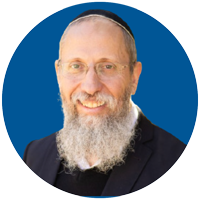
Rabbi Yosef Zvi Rimon is the Nasi of World Mizrachi. He is the Founder and Chairman of Sulamot and La’Ofek, and serves as the Chief Rabbi of Gush Etzion, and Rosh Yeshivah of the Jerusalem College of Technology.